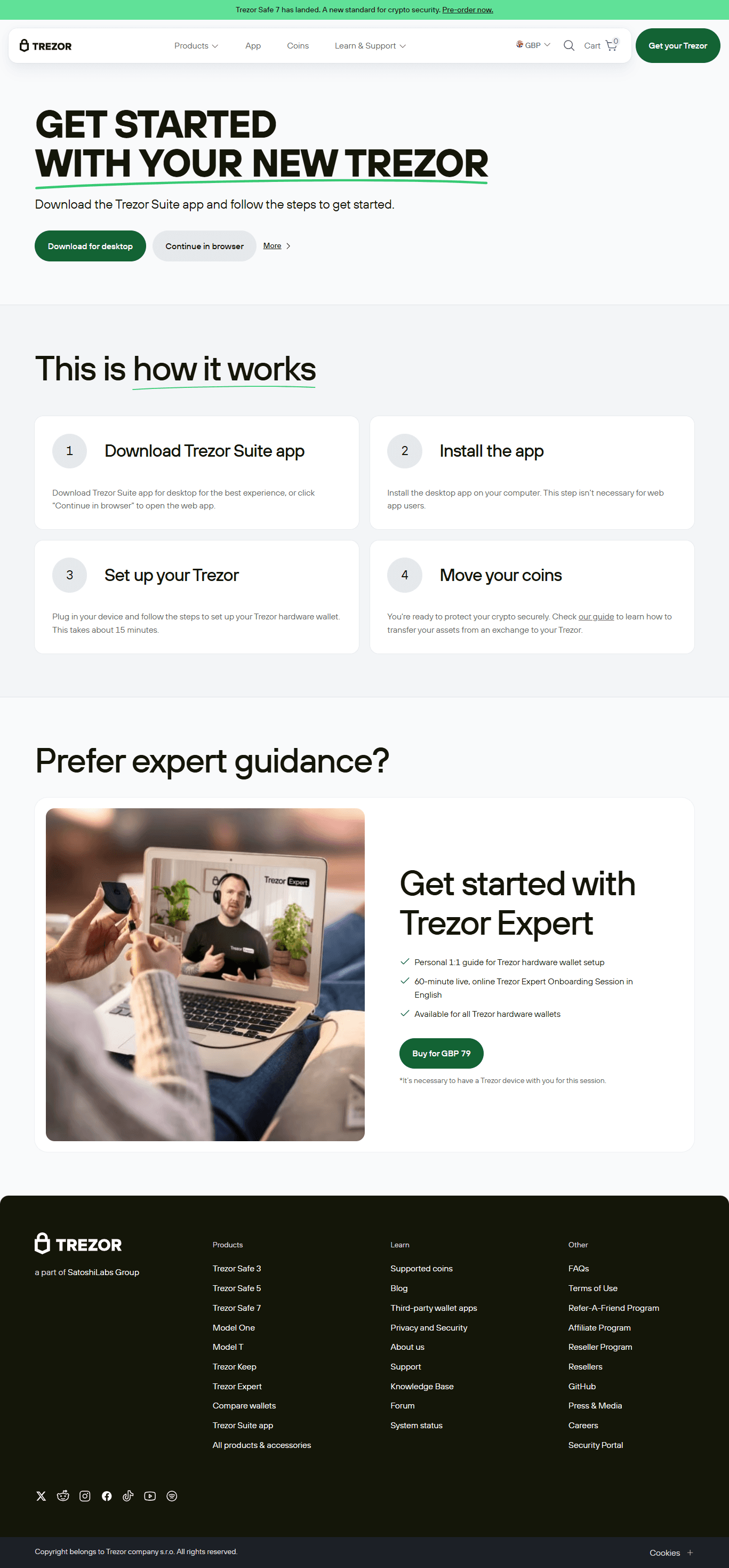
Trezor Suite:
Introduction
As cryptocurrency adoption continues to grow worldwide, the need for secure, user-friendly tools to manage digital assets has never been greater. Unlike traditional banking systems, cryptocurrencies place full responsibility on users to protect their private keys and approve transactions accurately. This is where hardware wallets and secure management software play a critical role.
Trezor Suite is the official application developed by Trezor to help users manage their cryptocurrencies safely while maintaining full self-custody. Designed to work seamlessly with Trezor hardware wallets, Trezor Suite combines advanced security, intuitive design, and powerful portfolio management features into a single platform.
This guide provides 1500+ words of completely original content with clearly highlighted headings, offering a comprehensive overview of Trezor Suite, its features, setup process, security model, and long-term benefits.
What Is Trezor Suite?
Trezor Suite is the official desktop and web-based application used to manage Trezor hardware wallets. It acts as a secure interface between the user and the blockchain, allowing users to send, receive, store, and monitor cryptocurrencies without exposing private keys to the internet.
Unlike software-only wallets, Trezor Suite works in combination with a physical Trezor device, ensuring that sensitive cryptographic operations are performed offline.
Key purposes of Trezor Suite include:
Managing cryptocurrency accounts and balances
Sending and receiving digital assets
Installing and updating device firmware
Enhancing privacy and security settings
Serving as a gateway to Web3 and DeFi applications
Why Trezor Suite Is Important for Crypto Security
Most cryptocurrency hacks occur because private keys are exposed on internet-connected devices. Malware, phishing attacks, and compromised applications can all lead to irreversible asset loss.
Trezor Suite improves security by:
Keeping private keys inside the hardware wallet
Requiring physical confirmation for every transaction
Verifying transaction details on the device screen
Preventing unauthorized access through PIN protection
By separating private keys from online environments, Trezor Suite significantly reduces attack surfaces.
Supported Trezor Devices
Trezor Suite supports all modern Trezor hardware wallets, including:
Trezor Model One – A reliable, beginner-friendly device
Trezor Model T – A premium model with touchscreen support
The application automatically adapts its interface and setup instructions based on the connected device.
How Trezor Suite Works with Hardware Wallets
Trezor Suite acts as a communication bridge between the user and their hardware wallet. While the software displays balances and prepares transactions, all sensitive actions occur inside the Trezor device itself.
This includes:
Private key storage
Transaction signing
Recovery seed verification
Even if a computer is infected with malware, private keys remain protected within the hardware wallet.
Installing Trezor Suite
System Requirements
Trezor Suite is available for multiple platforms:
Windows
macOS
Linux
Web-based version (limited functionality)
Installation Process
Download Trezor Suite from the official Trezor website
Install the application following on-screen instructions
Connect your Trezor hardware wallet via USB
Complete firmware verification if required
Using official sources ensures the software is authentic and secure.
Setting Up Trezor Suite for the First Time
Device Connection and Verification
Once connected, Trezor Suite checks the authenticity of the device and verifies firmware integrity.
Creating or Restoring a Wallet
Users can either:
Create a new wallet with a new recovery seed
Restore an existing wallet using a recovery phrase
All recovery operations are performed directly on the hardware device.
Understanding the Trezor Suite Interface
Trezor Suite is designed for clarity and ease of use.
Key interface sections include:
Dashboard – Overview of balances and portfolio value
Accounts – Individual cryptocurrency wallets
Transactions – Detailed transaction history
Settings – Security, privacy, and device options
The clean layout helps users avoid costly mistakes.
Sending and Receiving Cryptocurrencies
Receiving Assets
Users can generate verified receiving addresses directly through Trezor Suite. Addresses are confirmed on the hardware wallet screen to prevent address manipulation.
Sending Assets
When sending funds:
Transaction details are prepared in Trezor Suite
Details are displayed on the device screen
Physical confirmation is required to sign
This process ensures accuracy and security.
Portfolio Tracking and Account Management
Trezor Suite allows users to manage multiple accounts and cryptocurrencies within one interface.
Features include:
Real-time balance tracking
Fiat value estimation
Transaction labeling
Multi-account support
This makes it suitable for both casual users and long-term investors.
Privacy Features in Trezor Suite
Trezor Suite includes advanced privacy-enhancing options.
These include:
Tor integration for anonymized network traffic
Disabling third-party analytics
Coin control features for supported networks
Privacy-conscious users can customize settings to reduce blockchain surveillance exposure.
Firmware Updates Through Trezor Suite
Keeping firmware updated is critical for security.
Trezor Suite notifies users when updates are available and guides them through:
Firmware installation
Authenticity verification
Safe update confirmation
Firmware updates often include security improvements and new features.
Supported Cryptocurrencies
Trezor Suite supports a wide range of digital assets, including:
Bitcoin
Ethereum
Litecoin
Cardano
Thousands of ERC-20 tokens
Support is continuously expanded through updates.
Using Trezor Suite with Web3 and DeFi
Trezor Suite can integrate with compatible Web3 applications.
This allows users to:
Interact with decentralized exchanges
Participate in DeFi lending and staking
Manage NFTs
Vote in DAO governance
Private keys remain securely stored on the hardware wallet during all interactions.
Common Mistakes to Avoid
Using Unofficial Software
Always download Trezor Suite from official sources.
Ignoring Device Screen Confirmations
Never approve a transaction without verifying details on the hardware wallet screen.
Storing Recovery Seeds Digitally
Recovery phrases should always remain offline.
Trezor Suite vs Software Wallets
Software wallets store private keys on internet-connected devices, increasing vulnerability to cyberattacks.
Trezor Suite provides enhanced security by:
Keeping private keys offline
Requiring physical confirmation
Preventing remote access
For long-term holders, this added protection is essential.
Advantages of Using Trezor Suite
Official and trusted Trezor software
High-level security architecture
User-friendly interface
Strong privacy controls
Seamless hardware wallet integration
Long-Term Benefits of Trezor Suite
Trezor Suite is designed for both beginners and advanced users. As crypto portfolios grow, the application scales with enhanced security, multi-account support, and ongoing updates.
Using Trezor Suite encourages responsible self-custody and long-term asset protection.
Conclusion
Trezor Suite is a powerful, secure, and user-friendly platform for managing cryptocurrencies with a Trezor hardware wallet. By combining offline key storage, transparent transaction verification, privacy controls, and continuous updates, it provides one of the safest environments for crypto self-custody.
For anyone serious about protecting digital assets while maintaining full control, Trezor Suite stands out as an essential tool in the cryptocurrency ecosystem.